Most people start GLP-1 therapy with one goal in mind: lose weight. But the more precise and clinically meaningful goal is body recomposition - the simultaneous reduction of fat mass and preservation (or increase) of lean muscle mass.
The distinction matters enormously. Two people at the same weight can have dramatically different body compositions, different metabolic health profiles, and different risks for future disease. The goal should not be to weigh less - it should be to carry more muscle and less fat.
What Is Body Recomposition?
Body recomposition refers to a shift in the ratio of fat mass to lean mass. True recomposition involves:
- Decreasing fat mass: Particularly visceral fat, which drives metabolic dysfunction
- Maintaining lean mass: Preserving the muscle you already have during the caloric deficit GLP-1 creates
- Building lean mass (in ideal conditions): For some patients, particularly beginners to training, modest muscle gain during fat loss is achievable
GLP-1 therapy is an excellent tool for fat loss. Whether it supports true recomposition depends on how the protocol around it is structured.
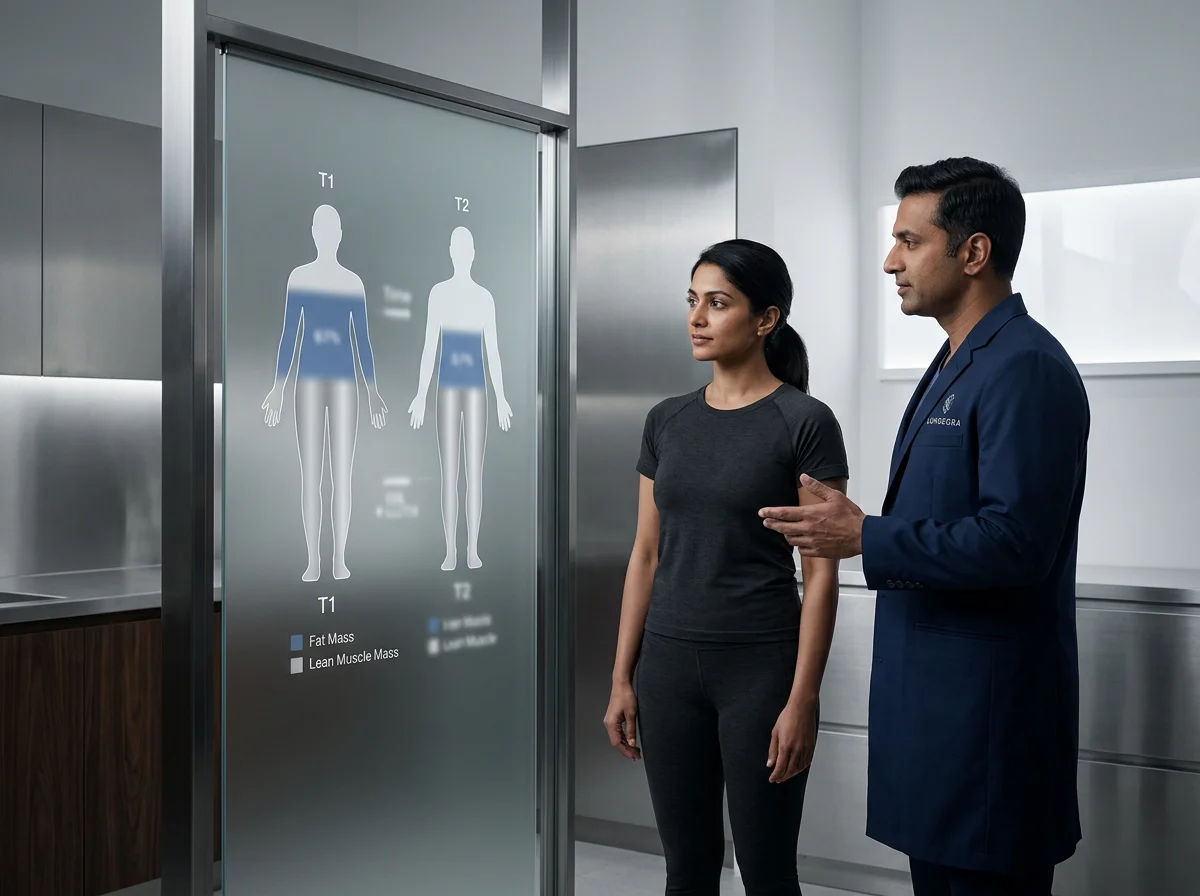
The Four Variables That Determine Body Composition on GLP-1
1. Protein Intake
The single most important nutritional variable. During a caloric deficit, protein is the primary signal that tells your body to spare muscle. Target: 1.8 to 2.2 g per kg of target body weight daily. This is non-negotiable for true recomposition.
2. Resistance Training
Muscle mass is preserved through use. Without a consistent resistance training stimulus, your body will catabolise muscle during the caloric deficit created by GLP-1. Two to four sessions per week of compound-movement resistance training is the evidence-based recommendation.
3. Rate of Weight Loss
Faster is not always better. Weight loss exceeding 1 to 1.5 kg per week significantly increases the proportion of lean mass lost. GLP-1 dose titration should be managed to achieve a steady, controlled deficit rather than the most aggressive possible rate.
4. Peptide Stack
For patients with a strong body composition focus, Longegra may add supporting peptides to the GLP-1 base:
- Ipamorelin with CJC-1295: Stimulates natural growth hormone release, which supports fat oxidation and muscle protein synthesis simultaneously
- BPC-157: Accelerates muscle and connective tissue recovery, supporting training volume maintenance during caloric restriction
- Peptide combinations for advanced goals: Discussed with your physician based on your specific metrics and program history
Tracking the Right Metrics
Scale weight alone is a poor proxy for body composition progress. A patient who loses 8 kg of fat and gains 2 kg of muscle has achieved a 10 kg positive body composition shift - but the scale only shows a 6 kg change.
Metrics that matter for body recomposition tracking:
- Body composition testing: Bioelectrical impedance or DEXA provides fat mass and lean mass separately
- Waist-to-hip ratio: A sensitive measure of visceral fat reduction
- Strength performance: Maintaining or improving your lift numbers while in a deficit confirms muscle preservation
- Biomarker panel: HbA1c, fasting insulin, and lipid improvements confirm metabolic recomposition beyond just body shape
At Longegra, we track all of these alongside scale weight to give you the full picture of your recomposition progress.
What to Expect: A Realistic Timeline
- Months 1-3: Predominantly fat loss; lean mass largely maintained with good protein and training. Noticeable change in body shape and visceral fat reduction.
- Months 3-6: Continued fat loss; some patients begin to see modest lean mass gains if training is progressing well and protein is adequate.
- Months 6-12: Meaningful recomposition for most patients who have followed the protocol. Body composition measurements show a significantly different fat-to-muscle ratio than at baseline.
Frequently Asked Questions (FAQs)
For most adults who are not beginners to training, simultaneously building significant new muscle while in a caloric deficit is difficult. The more achievable and highly valuable goal is preserving all existing muscle while losing fat, which represents a genuine recomposition in terms of body fat percentage. For beginners or detrained individuals, modest new muscle gain during fat loss is achievable.