How to Improve Mental Clarity With Peptide Therapy
Brain fog and reduced mental clarity have identifiable biological drivers including hormonal decline, neuroinflammation, and poor sleep. Peptide therapy addresses these systematically.

Editorial
Evidence-based, physician-reviewed guides for patients in India. GLP-1, hormone optimization, recovery, longevity, without the hype.

The connection between low testosterone and depression is direct, bidirectional, and frequently missed in standard care. Understanding this link is essential for men with treatment-resistant or unexplained depression.

Chronic cortisol elevation is one of the most damaging and underappreciated drivers of biological aging and disease. Peptide therapy offers targeted tools for restoring HPA axis balance.

Dihexa is a highly potent neuropeptide that upregulates HGF/c-Met signalling in the brain, driving synaptogenesis and memory improvement. This guide covers what it does and who it is for.

DSIP (Delta Sleep-Inducing Peptide) is a naturally occurring neuropeptide that promotes slow-wave sleep and reduces stress-related hormonal dysregulation. This guide covers its mechanisms and clinical use.

Poor sleep is both a symptom and a driver of hormonal decline. Peptide therapy addresses the biological causes of disrupted sleep through GH restoration, melatonin support, and anxiety reduction.

Depression is increasingly understood as a condition with hormonal and inflammatory drivers alongside neurotransmitter imbalances. Peptide therapy addresses these upstream causes in ways SSRIs cannot.

Semax is a synthetic ACTH analogue with established cognitive enhancement properties, working primarily through BDNF upregulation and neuroprotection. This guide covers how it works and how it is used.

Cognitive decline with aging is driven by neuroinflammation, reduced BDNF, and declining growth factor signalling. Peptide therapy offers targeted support for brain health through multiple mechanisms.

Selank is a synthetic analogue of tuftsin with established anxiolytic effects and cognitive benefits. Unlike benzodiazepines, it reduces anxiety without sedation or dependence risk.

Peptide therapy for women over 40 addresses the hormonal and biological changes of perimenopause and menopause with a precision that generic supplements cannot match. Here is the complete clinical picture.

Biological age is a measure of how your body is functioning relative to your chronological age. It can be measured, tracked, and modified through evidence-based interventions including peptide therapy.

5-Amino-1MQ is a small molecule NNMT inhibitor that supports fat cell metabolism and NAD+ availability. This guide covers how it works and its emerging role in metabolic optimisation and longevity protocols.

MOTS-c is a mitochondria-derived peptide that mimics the metabolic benefits of exercise through AMPK activation. This guide covers its mechanisms, longevity applications, and clinical use.

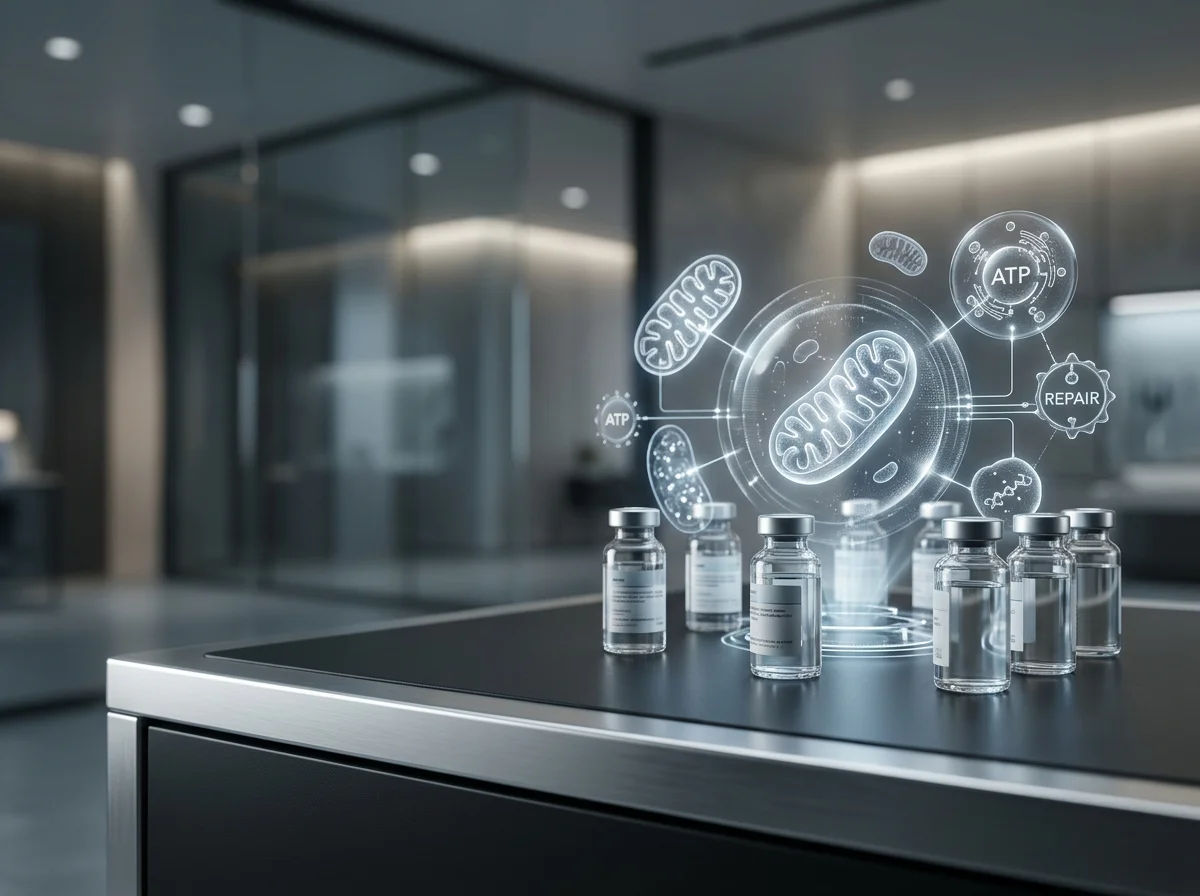
Mitochondrial dysfunction is a central driver of aging and age-related disease. Peptide therapy offers targeted support for mitochondrial function through multiple complementary mechanisms.

Peptides are among the most evidence-backed interventions for skin aging, working through collagen synthesis, angiogenesis, and anti-inflammatory mechanisms. Here is what the science shows.

A clinician's guide to the anti-aging peptides with the strongest evidence base in 2025, covering their mechanisms, what they address, and how they fit into a comprehensive longevity protocol.

Telomere length testing measures the biological age of your cells at the DNA level. This guide explains what telomere testing reveals, how to interpret results, and what interventions can protect your telomeres.

Thymosin Alpha-1 is the most clinically established immunomodulatory peptide, with applications in immune restoration, chronic infection, and longevity. Here is the complete clinical guide.

Biomarkers are measurable biological indicators that reveal how your body is actually functioning. Understanding which biomarkers matter for aging is the foundation of evidence-based longevity medicine.

GHK-Cu is a naturally occurring copper tripeptide with established roles in wound healing, collagen synthesis, and anti-inflammatory signalling. Emerging research suggests broader epigenetic longevity effects.

Biological age and chronological age are different things. This guide explains how to measure biological aging and which peptide interventions have the strongest evidence for slowing it.

Epitalon is a tetrapeptide derived from the pineal gland extract epithalamin. It is one of the few compounds with demonstrated telomerase-activating effects and a meaningful evidence base for longevity applications.

NAD+ is the master regulator of cellular energy and DNA repair. Combined with targeted longevity peptides, NAD+ precursor therapy forms the foundation of evidence-based anti-aging protocols.

Hexarelin is one of the most potent GH secretagogue peptides, producing stronger GH pulses than ipamorelin. This guide covers how it works, its clinical applications, and why physician oversight is essential.

Peptide therapy for anti-aging works by restoring the signalling molecules that decline with age, addressing the root biological causes of age-related decline rather than masking symptoms.

Different peptides work on different timelines. This guide sets realistic expectations for GLP-1, GH secretagogues, BPC-157, and other key peptides so you can track progress effectively.

Peptide therapy offers clinically meaningful relief for joint pain through angiogenesis, growth factor activation, and systemic anti-inflammatory mechanisms. This guide covers BPC-157, TB-500, and the evidence behind them.

Body recomposition, losing fat while gaining muscle simultaneously, is one of the most common goals in peptide therapy. This guide covers which peptides work best and how to combine them effectively.

GHRP-6 and GHRP-2 are first-generation growth hormone secretagogue peptides with potent GH-releasing effects. This guide covers how they work, how they compare to ipamorelin, and when physician oversight is required.

Peptides offer athletes a physiological advantage through improved recovery, GH optimisation, and enhanced tissue repair. This guide covers how to use them effectively and safely under physician supervision.

Anabolic steroids and peptides are both used for performance enhancement, but they work through entirely different mechanisms with vastly different risk profiles. Here is the complete comparison.

IGF-1 LR3 is a long-acting analogue of insulin-like growth factor 1, used to support muscle growth, recovery, and body recomposition under physician supervision. Here is what you need to know.

Several peptides support muscle growth through different mechanisms, from GH stimulation to direct IGF-1 action. This guide covers what the evidence shows and how to use them as part of a supervised protocol.

CJC-1295 is a long-acting GHRH analogue that provides sustained growth hormone stimulation. This guide covers how it works, clinical benefits, dosing considerations, and what to watch for.

Ipamorelin is the cleanest and most selective growth hormone secretagogue available. This comprehensive guide covers how it works, its benefits, how it is used, and why it is a cornerstone of Longegra's GH protocols.

Growth hormone peptides stimulate your pituitary to produce natural GH. This guide covers sermorelin, ipamorelin, CJC-1295, GHRP-6, hexarelin, and how to choose between them with physician guidance.

Peptide therapy can meaningfully accelerate healing from tendon, muscle, and ligament injuries. This guide covers the clinical protocol for injury recovery using BPC-157, TB-500, and supporting peptides.

BPC-157 is one of the most versatile healing peptides available, with evidence for accelerating tendon, muscle, gut, and neurological repair. Here is the science and how Longegra uses it clinically.

BPC-157 and TB-500 both accelerate tissue healing, but through different mechanisms. This guide compares their effects, best applications, and how combining them produces superior results.

CJC-1295 and ipamorelin are Longegra's signature growth hormone peptide stack. Together, they support testosterone through improved body composition, sleep quality, and Leydig cell function.

Testosterone and sleep have a powerful bidirectional relationship. Low testosterone disrupts sleep, and poor sleep suppresses testosterone. Here is how the cycle works and how to break it.

Enclomiphene raises testosterone by stimulating the body's own production, while TRT replaces it directly. This comparison helps you understand which is more appropriate for your clinical situation.

Kisspeptin is the master regulator of the HPG axis and one of the most powerful peptides for natural testosterone stimulation. Here is the science and why it is at the cutting edge of men's hormonal health.

HRT for men encompasses testosterone, growth hormone support, and peptide-based hormonal optimisation. This guide covers the full spectrum of men's HRT, from indications to protocols.

Low testosterone does not just affect libido. It directly drives visceral fat accumulation and metabolic dysfunction. Here is how the testosterone-fat relationship works and how to break the cycle.

Many men live with the symptoms of low testosterone for years without connecting them to a hormonal cause. This checklist of signs - physical, sexual, and psychological - helps you recognise the pattern.

Lab reference ranges for testosterone are population averages, not optimal levels. This guide explains what the numbers mean, why context matters, and how Longegra uses biomarker data to interpret results clinically.
Several peptides can meaningfully raise testosterone by stimulating the body's own production pathways. This guide covers kisspeptin, enclomiphene, sermorelin, and the full natural testosterone peptide toolkit.

Testosterone does far more than drive libido and muscle mass. It is a central metabolic hormone that regulates fat distribution, insulin sensitivity, and energy production. Here is how the link works.

Ipamorelin is a growth hormone secretagogue that indirectly supports testosterone through improved body composition, GH-IGF-1 axis function, and Leydig cell support. Here is the science and the clinical application.

Sermorelin stimulates the body to produce its own growth hormone and indirectly supports testosterone. TRT replaces testosterone directly. Here is how to think about which approach is right for your situation.

Home testosterone testing kits are now available in India, but not all are created equal. This guide explains what tests are available, what they measure, and why a full clinical panel gives you the complete picture.

TRT is one of the most common hormonal interventions for men, but it is not the right choice for everyone. This guide covers how TRT works, who it is appropriate for, and why peptide alternatives are worth considering.

Low testosterone affects millions of Indian men and is chronically underdiagnosed. This guide covers the symptoms to look for, the common causes, and the full range of treatment options including peptide therapy.
Wegovy is brand-name semaglutide at a specific dose for weight loss. Compounded semaglutide uses the same active molecule with greater dosing flexibility. Here is what actually differs between them.

GLP-1 therapy is highly effective for women, but there are important considerations around hormonal cycles, pregnancy, PCOS, and perimenopause that a good program must account for.

GLP-1 therapy does far more than reduce body weight. From insulin sensitivity to liver health and cardiovascular risk, here is the full metabolic picture of what this class of peptides actually does.

With multiple GLP-1 and GLP-1 adjacent peptides now available, choosing the best option requires understanding the evidence behind each. Here is the current clinical landscape in 2025.

Body recomposition - losing fat while maintaining or building muscle - is achievable on GLP-1 therapy with the right protocol. Here is how to structure your program for the best body composition outcome.

Getting a legitimate GLP-1 prescription online in India requires the right clinical process, not just filling in a form. Here is what a proper telehealth onboarding should look like and what to watch out for.

Losing muscle during GLP-1 therapy is a real risk if you are not managing it correctly. This guide explains why it happens and exactly how to maintain lean mass while losing fat.

Visceral fat suppresses testosterone. GLP-1 reduces visceral fat. The result is a hormonal improvement many men do not expect when they start a GLP-1 program. Here is the science.

GLP-1 therapy costs vary widely depending on whether you use brand-name drugs or physician-supervised compounding. This guide breaks down the real numbers and what you get for each option in India.

A medical weight loss program is different from a diet plan or gym membership. Here is what a clinically supervised peptide-based program looks like from intake to results, and why the difference matters.

Starting GLP-1 without baseline blood work is like navigating without a map. Learn which tests matter, what they reveal, and how Longegra uses biomarkers to personalise your program from day one.

Ozempic is not the only option for medical weight loss. This guide covers the full spectrum of GLP-1 and peptide alternatives, from tirzepatide to BPC-157, and how to choose the right one.

Ozempic is a brand name, not a category. Understanding the difference between GLP-1 peptides and specific branded products helps you make smarter decisions about your metabolic health.

Nausea is the most common GLP-1 side effect. This guide explains exactly why it happens, who is most affected, and the clinical strategies that make it manageable so you can stay on program.

GLP-1 therapy is not just for diabetes or women's health. For men dealing with visceral fat, metabolic syndrome, and low testosterone, it can be a transformative clinical tool.

Nausea, constipation, and fatigue are common in the early weeks of GLP-1 therapy. This guide explains why they happen and exactly how to manage them so you can stay on program.

GLP-1 weight loss does not happen overnight. This guide explains what to expect week by week, what affects your timeline, and how to track real progress beyond the scale.

Compounded GLP-1 peptides offer a supervised, affordable alternative to brand-name drugs. Learn what compounding means, how it works, and why medical oversight is non-negotiable.

Semaglutide and tirzepatide are both GLP-1 peptides, but they work differently. This guide compares their mechanisms, weight loss results, side effects, and who each is best suited for.

GLP-1 is a powerful gut hormone that controls appetite, blood sugar, and fat storage. Learn how GLP-1 peptide therapy works and why it is the cornerstone of modern medical weight loss in India.

Discover what peptides are, how they work in the body, and why peptide therapy is becoming a cornerstone of modern longevity, weight loss, and performance medicine in India.
Navigating peptide therapy, GLP-1 medications, and longevity science is easier when explanations are accurate, cautious, and built for India. Each guide is written for patients who want to understand clinician-supervised care, relevant labs, and realistic outcomes.
From Tirzepatide and Semaglutide to BPC-157, NAD+, and hormone stacks, our library connects research to practical next steps, including when to book a Longegra intake.