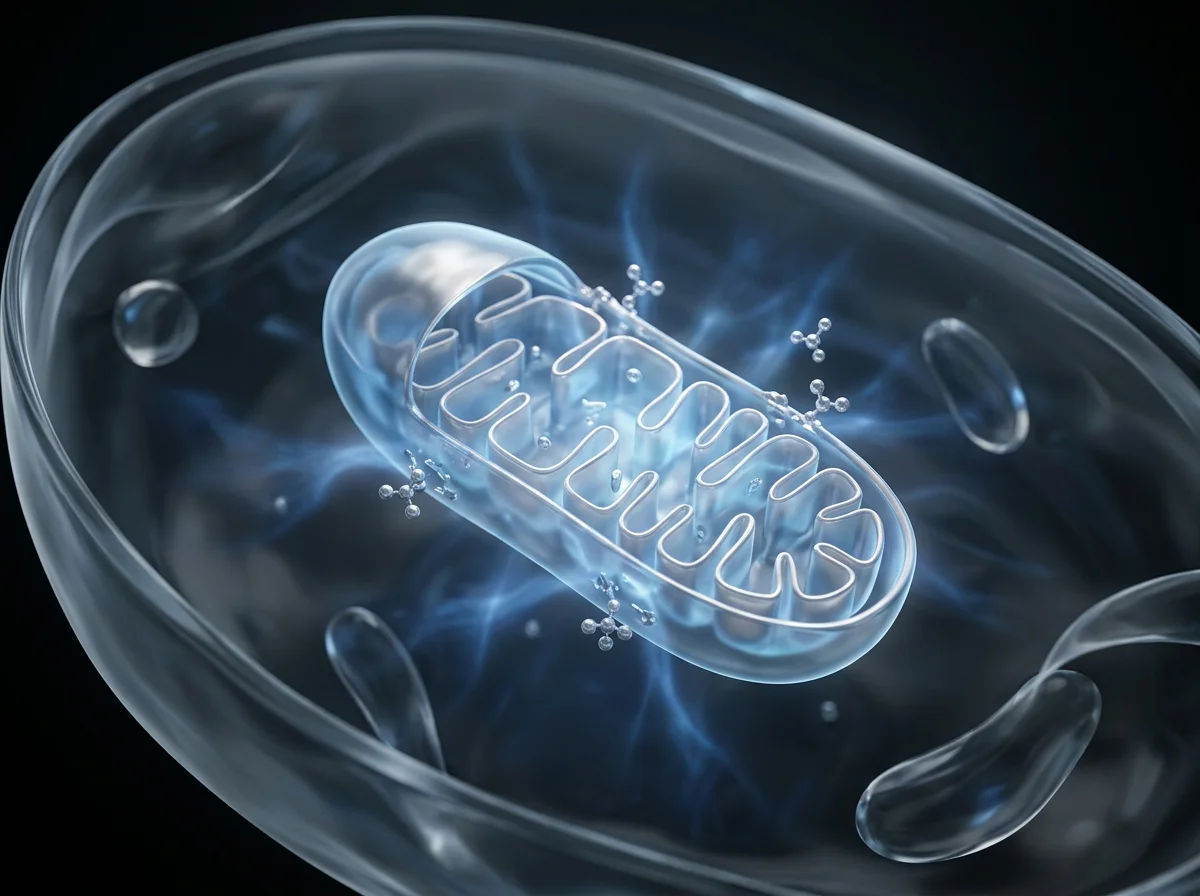
Mitochondria are the energy-producing organelles in every cell, responsible for converting nutrients into ATP (adenosine triphosphate), the universal energy currency that powers every biological process. They also play central roles in calcium signalling, apoptosis regulation, reactive oxygen species (ROS) production, and the activation of longevity pathways including sirtuins and AMPK.
Mitochondrial dysfunction is now recognised as one of the hallmarks of aging: an early, progressive, and causally significant driver of the decline in physical and cognitive function that defines biological aging.
How Mitochondria Age
Mitochondrial aging involves several overlapping processes:
- Accumulated mtDNA mutations: Mitochondria have their own small circular DNA genome (mtDNA). Unlike nuclear DNA, mitochondrial DNA lacks robust repair mechanisms and is directly exposed to the reactive oxygen species produced during energy generation. Mutations accumulate with age, impairing mitochondrial function.
- Reduced mitochondrial biogenesis: The process of creating new mitochondria (driven by PGC-1alpha, the master regulator of mitochondrial biogenesis) declines with age, reducing the cell's capacity to replace damaged mitochondria.
- Impaired mitophagy: Mitophagy is the selective autophagy of damaged mitochondria. When mitophagy declines, dysfunctional mitochondria accumulate rather than being recycled, dragging down the efficiency of the entire mitochondrial network.
- NAD+ depletion: Mitochondrial energy production requires NAD+ as an electron carrier. Age-related NAD+ decline directly impairs the electron transport chain, reducing ATP output and increasing ROS production.
- Reduced membrane potential: The electrochemical gradient across the mitochondrial inner membrane drives ATP synthesis. Aging reduces this potential, decreasing energy efficiency.
The cellular consequences: reduced ATP availability, increased oxidative stress, impaired signalling, and accelerated senescence.
Peptides That Support Mitochondrial Health
MOTS-c: The Mitochondrial Signalling Peptide
MOTS-c is a peptide encoded within the mitochondrial genome itself, making it unique among longevity peptides. It acts as a mitochondrial signalling molecule that:
- Activates AMPK (AMP-activated protein kinase), the master cellular energy sensor
- Promotes mitochondrial biogenesis through AMPK-PGC-1alpha signalling
- Improves insulin sensitivity and glucose uptake in skeletal muscle
- Has been shown to extend lifespan in animal models when administered exogenously
MOTS-c levels decline with age and in metabolic disease, suggesting a causal role in the mitochondrial aging process.
GH Peptides and Mitochondrial Function
Growth hormone and IGF-1 have established roles in mitochondrial health, including promotion of mitochondrial biogenesis and support of the oxidative phosphorylation pathway. Restoring GH pulsatility through CJC-1295 and ipamorelin has downstream mitochondrial benefits beyond its well-known effects on body composition.
Humanin: Mitochondrial Protection Against Stress
Humanin is another mitochondria-derived peptide (MOTS-c's family member) that protects cells against mitochondrial stress-induced apoptosis. It has shown neuroprotective effects and is associated with longevity in population studies (people with centenarian relatives have higher Humanin levels). Humanin research is earlier-stage than MOTS-c but represents an emerging area of mitochondrial peptide therapy.
BPC-157: Supporting Mitochondrial Integrity
BPC-157's cytoprotective effects include protection of mitochondria against oxidative damage and toxic insults. It upregulates protective enzymes and growth factor signalling that maintain mitochondrial integrity during cellular stress.
NAD+ Precursors: The Essential Complement
Peptides alone cannot fully address mitochondrial aging without addressing the NAD+ depletion that impairs the mitochondrial electron transport chain. NAD+ precursors (NMN and NR) restore intracellular NAD+ levels, directly fuelling the mitochondrial energy production machinery.
The combination of:
- NAD+ precursors (restoring mitochondrial fuel supply)
- MOTS-c (activating AMPK and mitochondrial biogenesis)
- GH peptides (supporting GH/IGF-1-driven mitochondrial maintenance)
represents the most comprehensive currently available approach to mitochondrial longevity support.
Exercise: The Non-Negotiable Mitochondrial Stimulus
Exercise, particularly a combination of aerobic and resistance training, is the most powerful known stimulus for mitochondrial biogenesis in skeletal muscle. The adaptations induced by exercise (AMPK activation, PGC-1alpha upregulation, mitochondrial proliferation) overlap significantly with the mechanisms of MOTS-c and NAD+ precursors.
Peptide and precursor therapy for mitochondrial health amplifies the exercise stimulus; it does not replace it. Patients who exercise regularly while on mitochondrial support protocols see significantly better outcomes than sedentary patients on the same protocol.
The Metabolic Biomarkers That Reflect Mitochondrial Health
Mitochondrial function cannot be measured directly in routine clinical practice, but several biomarkers serve as indirect indicators:
- HbA1c and fasting insulin: Insulin resistance is a downstream consequence of mitochondrial dysfunction in skeletal muscle
- Resting metabolic rate: Can be assessed through indirect calorimetry; declines with mitochondrial aging
- Lactate/pyruvate ratio: Elevated in severe mitochondrial dysfunction
- Exercise capacity (VO2 max): A functional measure of mitochondrial oxidative capacity
Frequently Asked Questions (FAQs)
The most accessible indicators are metabolic: fatigue disproportionate to activity level, declining exercise performance despite consistent training, insulin resistance, and elevated HbA1c. A comprehensive metabolic biomarker panel provides the most useful picture. More direct mitochondrial assessment (metabolic rate measurement, specialised testing) is available in some clinical settings.