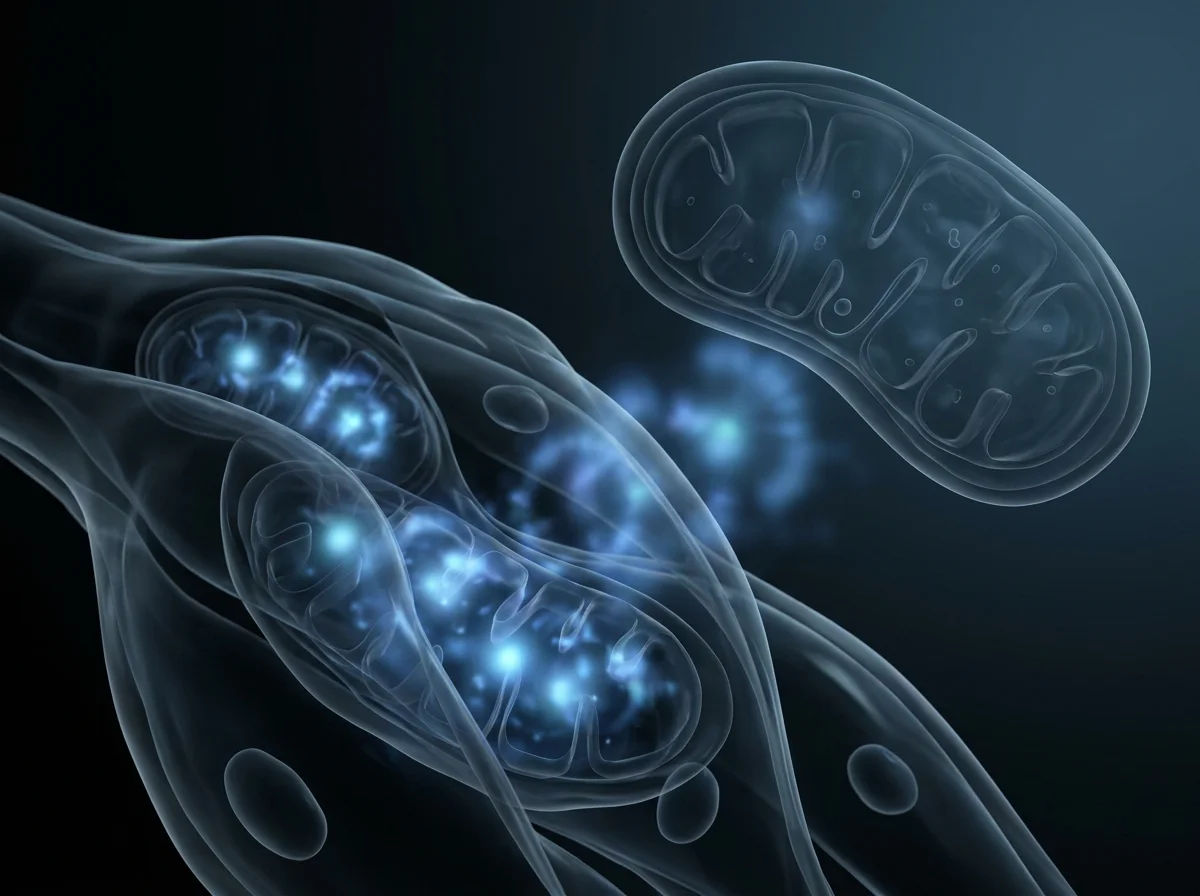
MOTS-c is a 16-amino acid peptide encoded within the mitochondrial genome, specifically within the 12S rRNA gene. Its discovery in 2015 by researchers at the University of Southern California opened a new chapter in longevity science: the recognition that mitochondria act not only as energy factories but as active signalling centres that communicate with the rest of the cell, and the body, through peptide hormones.
What Makes MOTS-c Unique
Most peptides studied in longevity medicine are products of nuclear gene expression. MOTS-c is different: it is encoded in mitochondrial DNA, the small circular genome inherited exclusively from the mother, making it a mitochondria-derived peptide (mitokine).
This origin is significant because mitochondrial function and nuclear cell function are co-regulated. MOTS-c acts as a messenger between the mitochondria and the nucleus, translating the mitochondrial energy status into adaptive cellular responses. When cells are under metabolic stress (energy deficit, exercise, caloric restriction), MOTS-c is released and travels to the nucleus to activate stress-response gene programs.
How MOTS-c Works: The Exercise Mimetic Mechanism
The central mechanism of MOTS-c is AMPK (AMP-activated protein kinase) activation. AMPK is the master cellular energy sensor, activated when the ATP/AMP ratio falls (i.e., when cells need more energy than they are producing). AMPK activation triggers a cascade of metabolic adaptations:
- Increased glucose uptake in skeletal muscle: AMPK drives GLUT4 translocation to the cell surface, improving glucose disposal independent of insulin
- Enhanced fatty acid oxidation: AMPK inhibits fatty acid synthesis and promotes mitochondrial fat burning
- Mitochondrial biogenesis: AMPK activates PGC-1alpha, the master regulator of new mitochondria production
- Improved insulin sensitivity: The combination of increased glucose disposal and enhanced fat oxidation directly improves whole-body insulin sensitivity
This constellation of effects is remarkably similar to the acute metabolic response to aerobic exercise, which is why MOTS-c is described as an exercise mimetic.
MOTS-c and Longevity: The Evidence
Animal Studies
The foundational longevity data for MOTS-c comes from animal models:
- Exogenous MOTS-c administration in mice increased lifespan by approximately 5% compared to controls
- Aged mice treated with MOTS-c showed improved physical performance (grip strength, exercise capacity) relative to untreated aged controls
- MOTS-c treatment reduced adiposity and improved metabolic parameters in diet-induced obese mice
Human Epidemiology
MOTS-c levels in human blood decline with age and are lower in metabolically unhealthy individuals (obese, insulin resistant, type 2 diabetic). A Japanese population study identified a variant in the MOTS-c encoding gene associated with longevity in centenarians, providing genetic evidence for MOTS-c's relevance to human longevity.
Early Human Data
Early-phase human studies of exogenous MOTS-c administration have demonstrated safety and pharmacodynamic effects (measurable AMPK activation, improved insulin sensitivity) at therapeutic doses.
MOTS-c in a Longevity Protocol
MOTS-c is most appropriately used in patients who:
- Have evidence of metabolic dysfunction (insulin resistance, elevated HbA1c, metabolic syndrome features)
- Are over 45 and show declining exercise capacity or metabolic efficiency
- Are using other longevity peptides and wish to address the mitochondrial/metabolic component specifically
It is typically administered subcutaneously and is used in cycles of four to eight weeks, followed by a break, to avoid receptor adaptation.
MOTS-c complements rather than duplicates other longevity peptides:
- GH secretagogues (CJC-1295, ipamorelin) address the GH/IGF-1 axis
- NAD+ precursors address the mitochondrial fuel supply
- MOTS-c activates the AMPK signalling that drives mitochondrial biogenesis and metabolic adaptation
The Exercise Synergy
It is important to clarify: MOTS-c is described as an exercise mimetic because it activates the same AMPK pathway as exercise, not because it replaces exercise. Exercise activates AMPK through multiple additional mechanisms and produces structural adaptations (muscle hypertrophy, bone density changes, cardiovascular remodelling) that MOTS-c cannot replicate.
The clinical application is as an amplifier of exercise effects and a metabolic support for patients whose exercise capacity is limited by injury, illness, or age-related mitochondrial decline.
Frequently Asked Questions (FAQs)
No. Exercise produces a much broader and more complex set of adaptations than any single peptide can reproduce. MOTS-c activates one important component of the exercise response (AMPK pathway) and amplifies the metabolic effects of exercise when used together with training.