"Natural testosterone boosting" is a phrase associated with a lot of supplement marketing noise. But there is a category of evidence-based peptide therapy that genuinely works by activating the body's own testosterone production pathways rather than delivering exogenous testosterone.
For men who want to raise their testosterone without suppressing natural function - particularly younger men, men concerned about fertility, or those with secondary hypogonadism - these peptides represent a clinically meaningful tool.
Understanding the HPG Axis: How Your Body Makes Testosterone
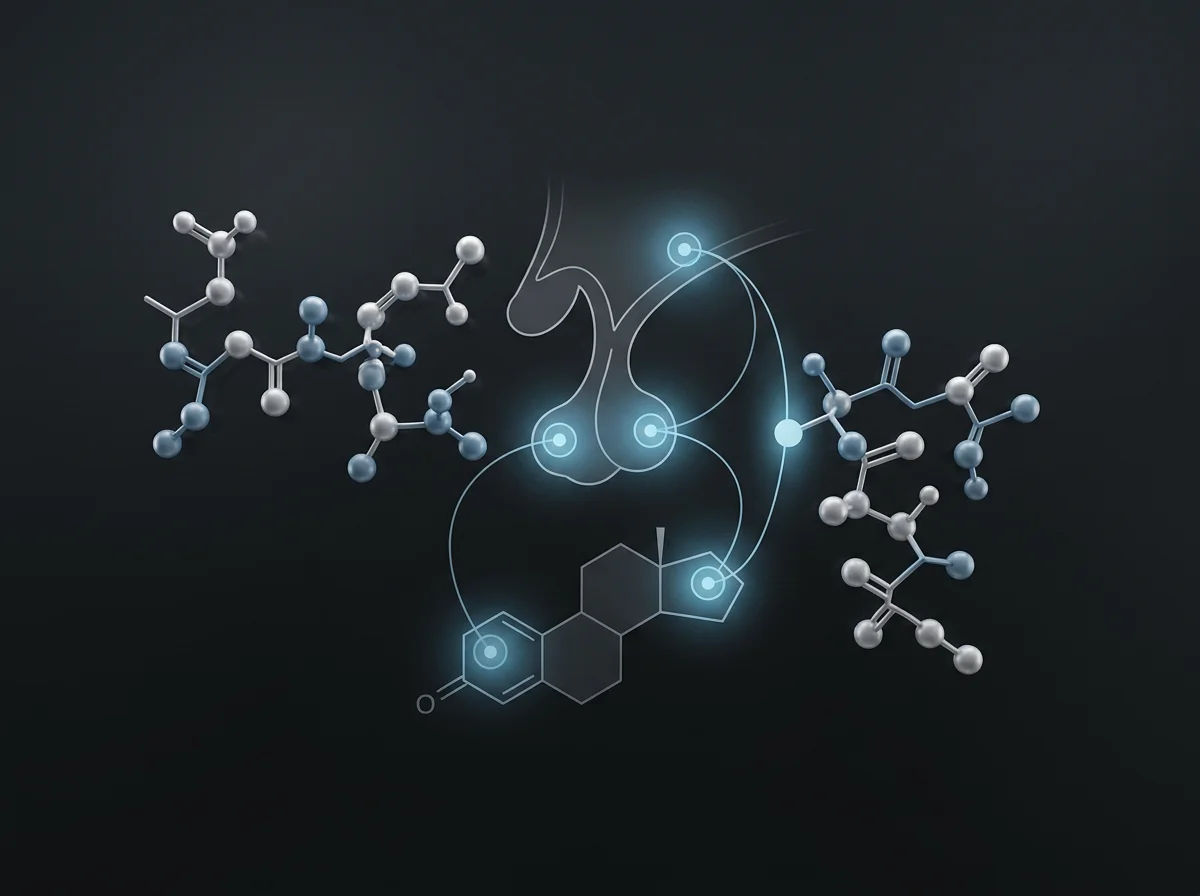
Testosterone production depends on an intact hypothalamic-pituitary-gonadal (HPG) axis:
- Hypothalamus releases GnRH (gonadotropin-releasing hormone), triggered by kisspeptin neurons
- Pituitary gland responds to GnRH by releasing LH (luteinising hormone) and FSH (follicle-stimulating hormone)
- Testes respond to LH by producing testosterone in Leydig cells; FSH supports sperm production
Most peptide approaches to natural testosterone boosting work by stimulating one or more nodes in this cascade.
Kisspeptin: The Master Regulator
Kisspeptin is a neuropeptide produced by hypothalamic neurons that acts as the primary upstream activator of the entire HPG axis. It is the "on switch" for GnRH pulsatility and is essential for normal testosterone production.
Research has shown that kisspeptin administration in men with hypogonadotrophic hypogonadism (low LH and FSH) can restore LH pulsatility and raise testosterone toward the normal range. It is one of the most direct peptide approaches to stimulating the HPG axis without feedback suppression.
Kisspeptin is at the cutting edge of Longegra's hormonal optimisation protocols and is particularly suited to men whose hypogonadism is hypothalamic in origin.
Enclomiphene: The SERM That Restores Natural Production
Enclomiphene is a selective oestrogen receptor modulator (SERM) that blocks oestrogen receptors in the hypothalamus and pituitary. This removes the oestrogen-mediated negative feedback that would otherwise suppress GnRH, LH, and FSH release.
The result: the pituitary receives less suppressive feedback and increases LH and FSH production, which drives the testes to produce more testosterone naturally.
Enclomiphene has shown in multiple clinical trials:
- Average testosterone increase of 150 to 200 ng/dL
- Preserved or improved sperm count (unlike TRT)
- Improvement in hypogonadism symptoms comparable to low-dose TRT
It is an excellent option for men with secondary hypogonadism who want to preserve fertility or natural production capacity.
Sermorelin and Ipamorelin: The GH Pathway to Testosterone
Growth hormone secretagogues like sermorelin and Ipamorelin raise testosterone indirectly through two mechanisms:
- Leydig cell support: IGF-1 produced in response to GH stimulates Leydig cell function in the testes
- Body composition improvement: GH and IGF-1 reduce visceral fat and increase lean mass, which reduces aromatase activity and improves the testosterone-to-oestradiol ratio
The testosterone effect of sermorelin is slower and indirect (operating over three to six months) but is complementary to other approaches.
CJC-1295: Sustained GH Stimulation
CJC-1295 (with DAC) is a modified GHRH analogue with a prolonged half-life, providing more sustained GH stimulation than sermorelin. It is often combined with Ipamorelin for synergistic effect. The same indirect testosterone-supporting mechanisms as sermorelin apply, with potentially greater GH elevation.
Who Benefits Most from Peptide Testosterone Support
Natural testosterone peptide protocols are most appropriate for:
- Men with secondary hypogonadism (intact testes but impaired pituitary or hypothalamic signalling)
- Younger men (under 45) concerned about preserving fertility and natural function
- Men with borderline low testosterone alongside GH deficiency
- Men who have not yet tried natural stimulation approaches before TRT
- Men wanting to delay or avoid lifelong TRT commitment
For men with primary hypogonadism (testes cannot produce testosterone regardless of signalling), direct TRT remains necessary.
Frequently Asked Questions (FAQs)
Results vary by underlying cause and the specific protocol. Enclomiphene studies show average increases of 150 to 200 ng/dL in men with secondary hypogonadism. Kisspeptin protocols show similar or greater effects in appropriate candidates. GH secretagogues contribute a smaller indirect increase. A physician assessment of your HPG axis function will give the most accurate expectation.