When men are told their testosterone is low, TRT (testosterone replacement therapy) is often the first recommendation. But it is not always the first intervention that should be tried. For men with secondary hypogonadism, declining growth hormone, or specific goals around fertility preservation, sermorelin and related peptides offer an alternative that works by stimulating the body's own hormonal production rather than replacing it externally.
Understanding the distinction between these two approaches helps you make a better-informed clinical decision.
What Is Sermorelin?
Sermorelin is a synthetic analogue of GHRH (growth hormone-releasing hormone), the hypothalamic signal that tells the pituitary gland to release growth hormone. By mimicking GHRH, sermorelin stimulates the pituitary's own GH secretion in a pulsatile, physiological pattern.
The pituitary response to sermorelin is subject to natural feedback controls, which means it produces GH release in a regulated, non-supraphysiological way. This is fundamentally different from direct GH injections, which bypass this regulation.
The GH-Testosterone Connection
Growth hormone and testosterone are closely linked through shared upstream hormonal pathways and mutual anabolic effects:
- GH and IGF-1 (produced in response to GH) support Leydig cell function in the testes, the cells responsible for testosterone production
- Low GH and low testosterone often co-occur in men with metabolic syndrome and central obesity
- Optimising GH through sermorelin can improve body composition (reducing fat, increasing muscle), which in turn reduces aromatase activity and improves testosterone levels
Sermorelin does not directly replace testosterone. But for men whose low testosterone is secondary to poor growth hormone function and excess adiposity, sermorelin can improve testosterone as a downstream effect.
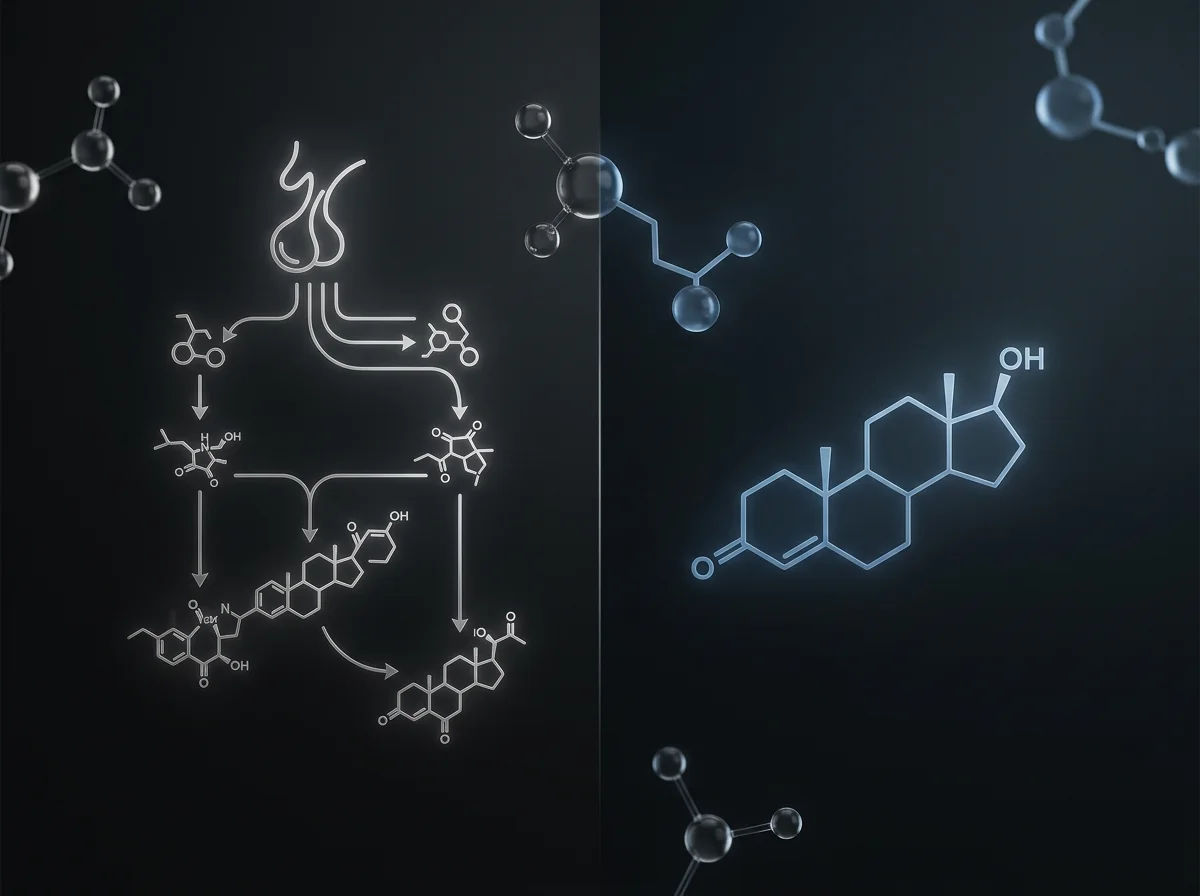
TRT: Direct Replacement
TRT delivers exogenous testosterone that directly raises blood levels. It is the most reliable way to normalise testosterone quickly and is clearly appropriate for men with primary hypogonadism (where the testes cannot produce adequate testosterone) or severe secondary hypogonadism unresponsive to stimulation protocols.
The tradeoff: TRT suppresses the body's own testosterone production via hypothalamic-pituitary feedback, reduces sperm production, and typically requires lifelong use once started.
Side-by-Side Comparison
| Factor | Sermorelin | TRT |
|---|---|---|
| Mechanism | Stimulates pituitary GH release | Exogenous testosterone delivery |
| Effect on natural production | Preserves or enhances natural function | Suppresses natural production |
| Effect on fertility | Neutral or positive | Significantly reduces sperm count |
| Time to effect | 3-6 months (gradual) | 2-4 weeks (fast) |
| Hormones improved | GH, IGF-1, and indirectly testosterone | Testosterone directly |
| Appropriate for | Secondary hypogonadism, GH decline, fertility preservation | Primary or severe hypogonadism, faster results needed |
When Sermorelin Is the Better Starting Point
Sermorelin (typically combined with Ipamorelin for enhanced GH pulsatility) is often the more appropriate first intervention for:
- Men under 45 with borderline low testosterone and concurrent GH deficiency
- Men who want to preserve fertility
- Men whose low testosterone appears primarily driven by poor body composition and metabolic health
- Men who want a "stimulate natural function" approach before committing to direct replacement
The response is slower than TRT but preserves more of the body's own hormonal machinery.
When TRT Is Clearly Indicated
TRT is the more appropriate choice when:
- Primary hypogonadism is confirmed (testes cannot produce regardless of pituitary signalling)
- Testosterone is severely low and symptomatic relief is urgent
- Prior peptide stimulation protocols have been tried without adequate response
- The patient is not concerned about fertility preservation
The Longegra Approach: Assessment Before Protocol
At Longegra, we do not default to TRT or default to peptides. We assess the full hormonal picture, including total and free testosterone, LH, FSH, GH, IGF-1, and relevant metabolic markers, and recommend the approach most appropriate for your specific hormonal profile and clinical goals.
Frequently Asked Questions (FAQs)
Sermorelin typically requires three to six months of consistent use to produce meaningful changes in GH, IGF-1, body composition, and energy. Testosterone improvement (where driven by GH/metabolic effects) follows a similar timeline.