Most men think of testosterone primarily in terms of sex drive, muscle, and masculinity. These are real effects. But testosterone's influence on metabolism is equally profound and arguably more important for long-term health outcomes.
Low testosterone and metabolic dysfunction are not parallel problems. They are deeply intertwined, and often, each makes the other worse.
Testosterone as a Metabolic Hormone
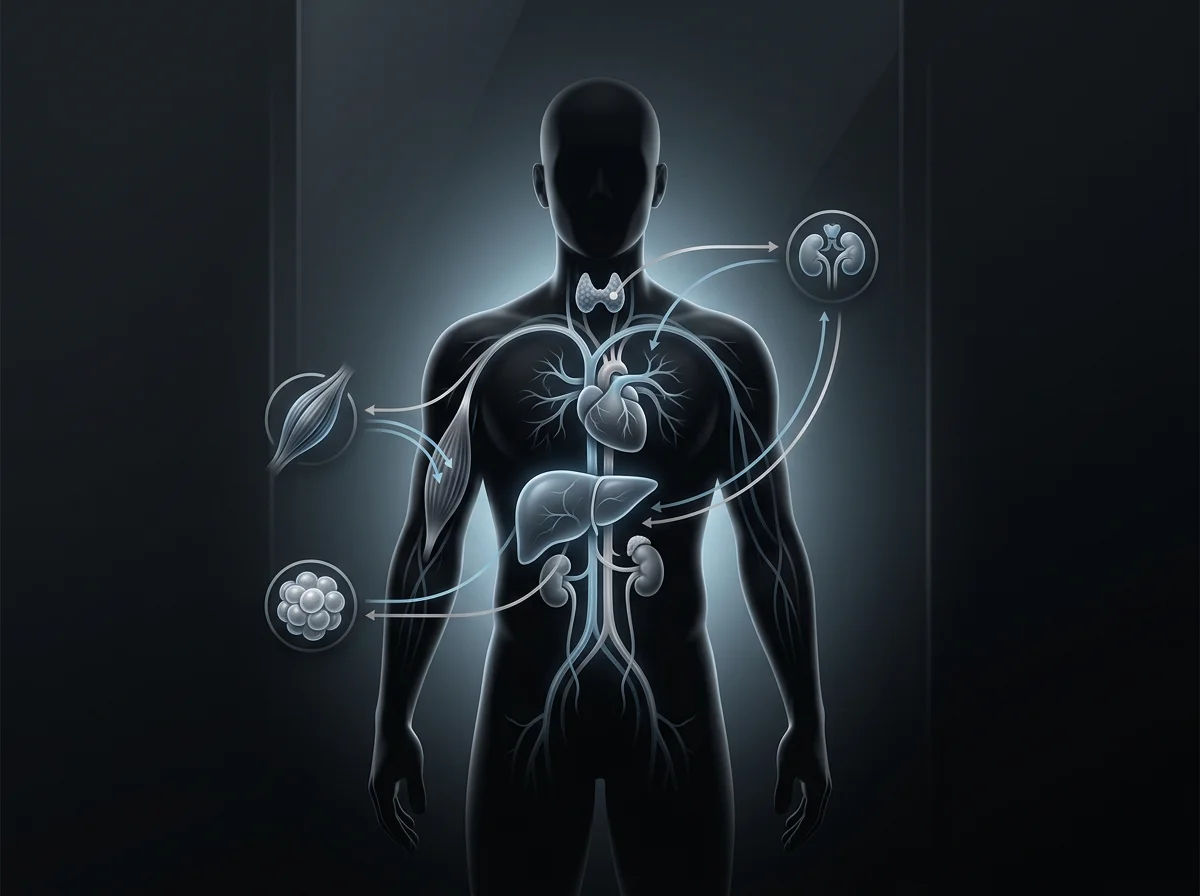
Testosterone acts directly on metabolic tissues throughout the body. Androgen receptors are found in:
- Skeletal muscle: Testosterone drives protein synthesis and muscle maintenance
- Adipose tissue: Testosterone inhibits fat cell differentiation and lipid storage, particularly in visceral fat depots
- The liver: Testosterone influences lipid metabolism, glucose production, and insulin signalling
- The pancreas: Androgen receptors in pancreatic beta cells influence insulin secretion
- The brain: Testosterone affects energy sensing, appetite regulation, and motivation
When testosterone is low, all of these systems are affected simultaneously.
How Low Testosterone Drives Metabolic Dysfunction
Increased Visceral Fat Accumulation
Testosterone inhibits the development and filling of adipocytes (fat cells), particularly visceral fat depots. When testosterone declines, this inhibition is reduced, and visceral fat accumulates preferentially. Visceral fat then becomes an independent driver of further metabolic dysfunction through inflammatory cytokine release and aromatase activity.
Worsening Insulin Resistance
Multiple studies show a direct correlation between testosterone levels and insulin sensitivity. Low testosterone is associated with increased insulin resistance, independent of body weight. The mechanism involves reduced glucose transporter expression in muscle cells and increased inflammatory signalling from visceral fat.
Men with type 2 diabetes have testosterone levels on average 15 to 20 percent lower than age-matched non-diabetic men.
Dyslipidaemia
Low testosterone is associated with elevated triglycerides, reduced HDL cholesterol, and elevated small dense LDL, the most atherogenic lipoprotein fraction. These changes increase cardiovascular risk substantially.
Reduced Resting Metabolic Rate
Muscle is metabolically expensive tissue that requires energy to maintain. Testosterone-driven muscle preservation keeps resting metabolic rate higher. Low testosterone accelerates muscle loss, reducing metabolic rate and making caloric surplus more likely.
The Bidirectional Problem
The relationship between testosterone and metabolism is bidirectional:
- Low testosterone causes metabolic dysfunction
- Metabolic dysfunction (particularly visceral adiposity) suppresses testosterone via aromatase-mediated conversion
This creates a self-reinforcing cycle that becomes increasingly difficult to break through lifestyle alone at a certain threshold.
Breaking the Cycle
The most effective approach to breaking this cycle combines metabolic intervention with hormonal optimisation:
- GLP-1 therapy: Reduces visceral fat, which reduces aromatase activity and directly improves testosterone as a secondary effect
- Testosterone optimisation: Restores insulin sensitivity, muscle mass, and fat distribution to a healthier state
- Growth hormone secretagogues (Ipamorelin, CJC-1295): Support body composition improvement and IGF-1-mediated metabolic function
At Longegra, we assess both metabolic and testosterone markers together because treating them in isolation misses the interaction.
Clinical Evidence
A 2019 study in the Journal of Clinical Endocrinology and Metabolism demonstrated that testosterone treatment in men with hypogonadism and metabolic syndrome produced:
- Average HbA1c reduction of 0.58%
- Significant triglyceride reduction
- Improved insulin sensitivity (HOMA-IR)
- Visceral fat reduction independent of weight change
These effects were additive when combined with lifestyle intervention.
Frequently Asked Questions (FAQs)
Directly, testosterone is not a weight loss agent. But by restoring metabolic rate, improving insulin sensitivity, and reducing visceral fat accumulation, testosterone optimisation creates a metabolic environment that is much more conducive to fat loss when combined with appropriate nutrition and exercise.